
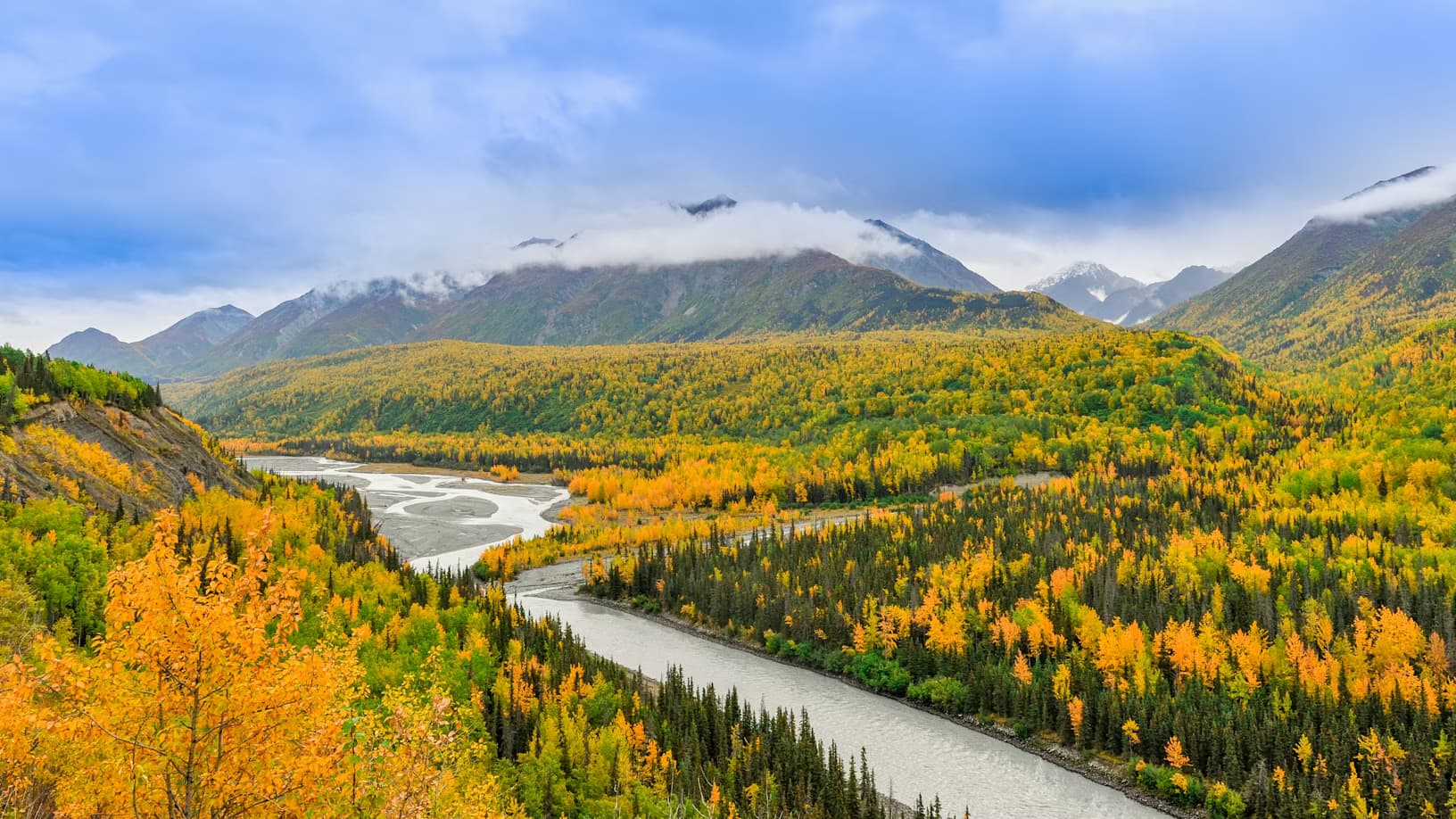
The Alaska Highway begins at a cairn in Dawson Creek, British Columbia — a modest monument at the corner of 10th Street and Alaska Avenue marking Mile 0 of one of the most ambitious roads ever built. The highway was carved through 2,400 kilometres of boreal wilderness in eight months during 1942, and large stretches of it still feel like they're at the edge of the known world.
Driving it with a dog is exactly as good as it sounds.
The Route
Mile 0 — Dawson Creek, BC to Mile 1422 — Delta Junction, AK
The highway runs northeast from Dawson Creek through Fort St. John, then northwest through Fort Nelson, crossing into the Yukon at Watson Lake, continuing to Whitehorse, then northwest through Haines Junction and Destruction Bay before entering Alaska at Beaver Creek and finishing at Delta Junction (or Fairbanks, depending on who you ask).
Most people take 5–10 days to drive it end to end. We took longer, which is the right call.
Starting at Mile 0
The Mile 0 Cairn in downtown Dawson Creek is the official starting point and worth a photo. The town itself is a functional northern BC city — services, fuel, and a few good stops before you commit to the highway. The Northern Alberta Railway Museum has outdoor grounds where dogs can walk.
Fill the tank in Dawson Creek. Then again at every opportunity. Gas stations exist along the highway but they're sometimes 200+ km apart and prices climb as you go north.
The Road Conditions
The Alaska Highway has been paved since the 1940s but it's a working northern highway, not a resort drive. Expect:
- Frost heaves — sections of road buckled by freeze-thaw cycles; slow down and drive them gently
- Construction zones — ongoing repaving throughout the summer
- Loose gravel shoulders and occasional gravel sections
- Wildlife on the road — bison herds near Fort Nelson, stone sheep on cliff sections near Muncho Lake, elk, moose, bears
Drive slower than you think you need to.
Highlights for Dogs
Stone Mountain Provincial Park (near Summit Pass, Mile ~392): The highest point on the Alaska Highway at 1,295m. Short walks from the road, alpine scenery, summit lake. Dogs on leash. The stone sheep on the rockslides will send your dog into a frenzy.
Muncho Lake Provincial Park (Mile ~456): The turquoise lake surrounded by the Muskwa Ranges is one of the most beautiful spots on the entire highway. A short walking trail along the lakeshore; dogs welcome on leash. The water is impossibly blue.
Liard River Hot Springs (Mile ~497): One of the best stops on the highway. The hot springs boardwalk trail is about 500m through a thermal forest — dogs are not permitted in the hot springs themselves but can walk the approach trail. The area around the campground is good walking.
Watson Lake, YT (Mile ~613): The Sign Post Forest — thousands of signs from every place imaginable, started by a homesick soldier in 1942. Walk through with your dog; it takes about 30 minutes and it's genuinely memorable.
Kluane National Park (Mile ~1000–1075): The highway skirts the eastern edge of Kluane, with views of the massive St. Elias icefield ranges. The Haines Junction area has good day hiking; the Dezadeash Lake Loop (10km) is dog-friendly on leash and very accessible.
Destruction Bay and Burwash Landing: Small First Nations communities on the shore of Kluane Lake — the largest lake in Yukon. The lake is extraordinary in morning light, ringed by the icefield mountains. Walk the gravel shore with your dog.
Camping Along the Highway
The highway has a good mix of provincial/territorial campgrounds, private RV parks, and the occasional wilderness camping opportunity.
- BC Provincial Park campgrounds in the south section are bookable at BC Parks
- Yukon Government campgrounds dot the highway through the territory; first-come-first-served, generally excellent, very dog-friendly
- Private campgrounds at most of the service communities; pet-friendly, often have laundry
Crossing the Border
The Alaska border crossing at Beaver Creek/Port Alcan is straightforward for Canadian and American citizens. Dogs require:
- Proof of current rabies vaccination
- A health certificate from a vet issued within 10 days of entry (for entering the US)
Do this before you leave. US Customs takes animal health seriously.
Practical Notes
- Cell service: Essentially non-existent from Fort Nelson until you approach Whitehorse. Download offline maps (maps.me or OsmAnd), a road conditions app, and anything else you need before Fort Nelson.
- Wildlife: Bears (black and grizzly), bison, wolves, moose. Keep your dog leashed at campgrounds and on trails. Store food properly.
- Emergency services: Very limited on the remote sections. Carry a basic first aid kit, extra food and water for you and your dog, and a satellite communicator (SPOT or Garmin inReach) is genuinely recommended.
- Vets: Fort St. John, Fort Nelson, and Whitehorse have veterinary services. There's very little between them.
The Honest Take
The Alaska Highway rewards patience. Drive it too fast and it's just a long road through trees. Give it time — stop when something looks interesting, let your dog run at the rest areas, watch the light change over Kluane Lake at 9pm when it's still fully bright.
The scale of what you're passing through only becomes clear when you stop moving. The boreal forest goes on further than you can imagine, the mountains grow bigger the further north you go, and by the time you cross into Alaska you feel like you've earned something.
This is what road trips are supposed to be.
Filed under:
Related Adventures
Prince George, BC with Your Dog: Northern BC's Outdoor Capital
March 15, 2026 · 9 min read
Whistler, BC with Your Dog: The Complete Four-Season Guide
January 20, 2026 · 8 min read
Penticton, BC Relaxation With Your Dog: Two Lakes, Orchard Country, and the Okanagan Summer
June 15, 2025 · 4 min read